Thursday, February 20, 2014

Returning to Net Neutrality


Bernie Sanders has recently posted a meme on Facebook saying that “The path to a free and open Internet is to reclassify it as a telecommunications service so that we can ensure equal access to and for all.”

That may seem odd, given the high prices of some telecommunications today, such as cell phones. But here’s what’s going on.

So far, we’ve had it pretty good here in the US. We have enjoyed what's called net neutrality, because the FCC has protected us. Now, that protection has been threatened. On January 14, Verizon has won an appeal against the FCC in a Federal Appeals Court in Washington, DC. This means that in the near future, carriers like Verizon may decide to charge for different amount of bandwidth. Wealthy persons and corporations could soon be given greater access to the internet than the rest of us. Ordinary people may find their service slowing way down if they cannot afford to pay top dollar for premium services. 

US Circuit Judge David Tatel explained, “Given that the commission has chosen to classify broadband providers in a manner that exempts them from treatment as common carriers, the Communications Act expressly prohibits the commission from nonetheless regulating them as such.”

This stems from the Federal Telecommunications Act of 1996, which distinguished between telecommunication providers and information providers. The FCC can regulate common carriers, as the law is now written, but they cannot regulate the information providers. 

“Without prompt corrective action by the commission to reclassify broadband,” said Michael Copps, a former FCC commissioner and a Common Cause adviser, “this awful ruling will serve as a sorry memorial to the corporate abrogation of free speech.”

Monday, July 5, 2010

Learning from the Evolution of Fish

A Fishy Take On Human Skin Tones : NPR

This story is interesting in and of itself. It talks about how humans come from fish, and that by studying fish, geneticists hope to have breakthroughs in understanding human evolution and development.

Science and religion seem to be at odds with one another for those who take their religious texts literally, and are taught that in order to be a good "Christian," or good "Muslim," or good "Jew," you have to take the text at face-value and not look for the deeper meanings involved.

Science and religion do not have to be at odds with one another, however. Mythology (as the study of myth) has a lot to teach us about how to reconcile the two. In the Greek stories (myths) about the divine (coming from the work 'div', to shine), we are told by Hesiod of life coming from the sea. Perhaps partly a nod to this tradition, or influenced by it, the father of Greek philosophy, Thales, said that everything is ultimately made of water. The biological sciences, since Darwin, have continued to impress upon us this ancient connection to the water.

But the ancient Babylonians worshiped a God of the deep waters of the earth, and the God of the salt seas, and talked of their union to form life on earth. It seems that the intuitions of the ancients resulted in stories that, while they can't be taken literally in a scientific sense, were often deeply insightful about the nature of reality. Much of the Bible needs to be read that way: as insightful intuitions revealed through stories.

What is the source of this insight? What is the source of intuition? Given that we can know so little (some would say nothing) about the world on the basis of sense impressions alone, how is it that we come to have knowledge about the world around us in the first place? Through what insight do gain any hint at the inner workings of nature?


Looking at this story through that lens may give new meaning to the meaning behind the story of Jonah in the belly of the whale.


PLEASE SUPPORT THIS BLOG THROUGH PURCHASES OF YOUR BOOKS, CD'S, AND DVD'S AT AURORA BOOKS, AN AFFILIATE OF AMAZON.COM. (CLICK ON THE WORD 'AURORA' IN THIS PARAGRAPH, OR CLICK ON THE BOOK COVERS ABOVE).

Wednesday, June 30, 2010

Not How Capitalism is Supposed to Work

Article: Matt Miller - We must ratchet back bankers' pay


Congress is debating how to fix the financial system. They are doing so while, indirectly, getting paid large sums of money and being threatened by the very people they would be regulating. In the meantime, millions are without jobs, and the financial system is wrecked.


Matt Miller, author of The Tyranny of Dead Ideas, explains the situation quite well in an article today entitled "We must ratchet back bankers' pay." Some conservatives on the right end of the spectrum who do not understand economics very well will say that this is "communism," or some such nonsense. Miller understands that the way things are going now cannot possibly work. He writes: "The way pay is rigged at publicly owned Wall Street firms creates incentives for casino-style gambling, because bankers reap all the upside and stick shareholders or taxpayers with the losses. When their big bets go bad, in other words, top bankers walk away rich anyway. This is not how capitalism is supposed to work."


This is an important point. It is "not how capitalism is supposed to work." Capitalism works when people win through hard work and good ideas being put into practice, and when people lose through laziness and bad ideas. Gambling away other people's money and getting rewarded for it wasn't part of the picture Adam Smith had in mind. 


We should consider the fact that "It wasn't always like this." Miller goes on to explain: "There was a time when CEOs and boards of directors operated with at least some understanding of proportion and restraint. In the book I cite George Romney (father of Mitt) as perhaps the most interesting example of this lost species. Romney voluntarily turned down $268,000 over five years, about 20 percent of his earnings, when he was CEO of American Motors. 'In 1960, for example' the New York Times noted, 'he refused a $100,000 bonus. Mr. Romney had previously told the company's board that no executive needed to make more than $225,000 (about $1.4 million in today's dollars), a spokesman for American Motors explained at the time, and the bonus would have put him above that threshold.'"


It is obvious that while George Romney was a good capitalist, he was also a man who espoused religious and/or moral values that urged him to look beyond financial reward in life. 


I have long had an interest in the Japanese Samurai tradition. When I look at their sense of honor, I find myself comparing it to the lost sense of honor in our own tradition. Recently, I read that a congressman from Louisiana, Rep. Cao, a Vietnamese-American, told a BP executive that if he'd been a Japanese Samurai, they'd have handed him a knife to commit harikiri due to the shame that he had brought upon himself. It sounds ridiculous, in one sense. But it speaks to a sense of honor, and a sense of justice, that our leaders in society seem to have lost.  When religions encourage making money at any cost, and forget to remind  us that money is not everything, then people who don't know any better begin to think that they can be comfortable Christians while being directed primarily by  greed and behaving without concern for justice, fairness, or the welfare of other people. All of the major religions teach that while money has its place, it must not be our guide in life. 


When Jesus tells the rich man that in order to reach the Kingdom of Heaven he has to give away what he owns and follow him, I suspect that he did not mean for everyone to do something that drastic. It might have been spot on for that one man in that case. But I do believe that Jesus would have pointed to George Romney's decision to recognize the need to limit one's greed and to focus on justice in society, as a step on the path to the Kingdom of Heaven.


PLEASE SUPPORT THIS BLOG BY PURCHASING YOUR BOOKS, CD'S, AND DVD'S AT AURORA BOOKS. CLICK ON THE LINKS ABOVE, OR ON THE COVERS TO PURCHASE THE ITEMS SHOWN.

Tuesday, June 22, 2010

BBC News - UK health system is top on 'efficiency', says report

Article: BBC News - UK health system is top on 'efficiency', says report

"The US came last in the overall rankings, which also included data from Australia, Canada, Germany, the Netherlands and New Zealand."

This is what those of us who support real health reform see. We have the power to create the kind of America we want to live in. Scare tactics are used to distort what is possible. The myth about the inefficiency of socialized medicine is exposed in this report, amongst others. It says "The UK has relatively short waiting times for basic medical care and non-emergency access to services after hours, but has longer waiting times for specialist care and elective, non-emergency surgery." And that's the way it should be. Their focus is on care that is needed, and care this is elective can wait.


There is a moral issue at stake when we debate whether health care's costs and provision should be driven by free market economics. Should private companies be allowed to drive up prices to improve their profits? Should they be able to decide who gets health care and who doesn't? Should they be able to decide that someone cannot get health care because they have a preexisting condition? The decision to have a for-profit health care system is a decision to help a few people make vast sums of money at the expense of the sick. 

Recommended video: Sicko


THANK YOU FOR SUPPORTING THIS BLOG WITH YOUR BOOK, CD, AND DVD PURCHASES FROM AURORA BOOKS. CLICK ON THE IMAGES OR LINKS ABOVE TO PURCHASE THE RECOMMENDED ITEMS OR GO TO AURORA BOOKS AND SEARCH FOR THE BOOK, CD, OR DVD OF YOUR CHOICE.

Charlie Rose - Tony Blair, Former British Prime Minister

Video: Charlie Rose - Tony Blair, Former British Prime Minister

If you're interested in what is happening in the Israeli-Palestinian conflict, then this is something you should see.

The Israeli-Palestinian conflict is one of the central problems on planet Earth. We will never know if there would have been terrorist issues for other reasons if there had been no Israeli-Palestinian conflict, but we do know that the one we have now is directly related to it.

There are some people in this world who are hell-bent for war and conflict, and are just looking for reasons to use an excuse for it. That appears to be as true of the United States as it is for Israel, Hamas, Iran, or Palestine. There is probably no country on the face of our planet who doesn't have some faction that would rather be in war than out of it.

That being said, the former U.K. Prime Minister Tony Blair seems to genuinely believe that the possibility of genuine peace between Israel and the Arab world is real. And that is something we should all--unless we're arms dealers--hope for.

There is never peace in parts of the world where there is a struggle to sustain oneself. The Palestinians have to have hope that they can make a living side by side with the Israelis. Mr. Blair says that they are real close to an agreement for the Israelis to loosen the blockade that now exists in Gaza. But for a permanent solution to occur, the Israelis have to have hope that the Palestinians can govern themselves like a responsible neighbor who can restrain its militant factions. To be able to do that, the Palestinians have to be able to trust that the Israelis will restrain their militant elements as well. When asked about the U.S. role, Mr. Blair very nicely explained that the U.S. can't just put out a plan and say "Here it is. Follow it whether you like it our not." The diplomacy of the situation requires putting forth a vision, offering hope, and helping the sides to take little steps toward realizing that vision and hope.

Recommended Books:
2. On Israel and the Israeli-Arab Conflict

THANK YOU FOR SUPPORTING THIS BLOG WITH YOUR BOOK, CD, AND DVD PURCHASES FROM AURORA BOOKS. CLICK ON THE IMAGES OR LINKS ABOVE TO PURCHASE THE RECOMMENDED ITEMS OR GO TO AURORA BOOKS AND SEARCH FOR THE BOOK, CD, OR DVD OF YOUR CHOICE.

Friday, June 18, 2010

Calls to Revolution and to Peace

Article: Nev. Senate hopeful Sharron Angle talks of armed revolt | ScrippsNews

It is becoming popular among Tea Party candidates to foment revolution. As indicated in this article, Senator Reid's opponent in Nevada, Sharron Angle, says that she hopes she wins at the ballot box, because if she doesn't, people might use their Second Amendment rights to take up arms against the government.
In a relatively short period of time (that happens to coincide the rise in prominence of conservative talk radio), we have gone from a few extreme militants like Timothy McVeigh who perpetrated the worst act of domestic violence before 9/11 when he blew up the federal center in Oklahoma, to having candidates for public office rallying their supporters to consider armed insurrection if they can't muster the votes to win an election.

I read recently that many Democratic lawmakers will not hold summer town meetings because they fear for their safety after last summer's Tea Party attacks.


Surely Christians and other spiritually minded people in this country do not support these notions, right? When Jesus was alive, there were many like Barrabas who fomented revolution against an unelected Roman government. Angry with the Roman occupation, Barrabas was apparently part of an armed uprising. These people expected the coming of a Messiah who would lead their armed rebellion to establish a new kingdom on earth. Jesus was a disappointment to such people. He said that their weapon should be love. Jesus taught that it was the peacemakers who are blessed. He said you should love your enemies, and implied that we should not take immediate offense when it seems someone is doing something wrong against us, but to "turn the other cheek." (There's an excellent scene in Franco Zefferelli's Jesus of Nazareth film that portrays a discussion between Barabbas and Jesus on this difference between their views.) And that was in the context of an unelected occupation force. So, hopefully, it is not Christians who support this talk of revolution against a democratically elected government just because they are in the minority and can't persuade a majority of their views.
In the 1960's, the Black Panthers and the Nation of Islam felt the same kind of frustration with the peaceful protests of Martin Luther King, Jr. They wanted action and they wanted it now. They wanted it by force. They wanted blood to be shed for the pain they felt. Malcolm X experienced a spiritual conversion before his death as he realized that Islam was meant to be a way of peace and should not be a vehicle for violence and hatred. King is today honored because of the Christian path he blazed (following his understanding of Jesus, Tolstoy, and Gandhi) toward peaceful resolution of injustice. Like Jesus, both Malcolm X and Dr. King were murdered by men whose hearts were filled with anger and hatred that distorted their sense of justice.
We need to consider what it means to have a good and clean heart as a human being. Is the heart of the spiritual warrior one that is filled with love and hopes for peace like Jesus and Dr. King? Or is it the heart of those who lead angry mobs toward violence?


Recommended movies: Jesus of Nazareth; Gandhi


THANK YOU FOR SUPPORTING THIS BLOG WITH YOUR BOOK, CD, AND DVD PURCHASES FROM AURORA BOOKS. CLICK ON THE IMAGES OR LINKS ABOVE TO PURCHASE THE RECOMMENDED ITEMS OR GO TO AURORA BOOKS AND SEARCH FOR THE BOOK, CD, OR DVD OF YOUR CHOICE.

Thursday, June 17, 2010

Missed Opportunity

Article: Robert Reich (Obama's Address to the Nation: A Missed Opportunity to Tell It Like It Is)

The disappointment with President Barack Obama is growing daily, and his last speech did nothing to allay our concerns. In this article, Robert Reich says:

Whether it’s Wall Street or health insurers or oil companies, we are approaching a turning point as a nation. The top executives of powerful corporations are pursuing profits in ways that menace the nation. We have not seen the likes since the late nineteenth century when the “robber barons” of finance, oil, railroads and steel ran roughshod over America. Now, as then, they are using their wealth and influence to buy off legislators and intimidate the regions that depend on them for jobs. Now, as then, they are threatening the safety and security of our people.

During the "robber baron" period, the wealthy controlled the politics of this country, and politicians dared not step out of line with what they wanted. They were foiled only when Theodore Roosevelt, who was given the most insignificant job in the country (in their opinion)--Vice President--to keep him out of the way, when he ascended to the presidency upon McKinley's assassination. That was the beginning of the Progressive Movement in America, putting the Sherman Antitrust Act into real action. The Progressive Movement was based upon the premise that the federal government had a significant role in making sure that the scales of power, between the wealthy and the masses, and between industrial leaders and labor, was balanced. Democracy cannot function if the scales are tipped in favor of the most wealthy amongst us. Democracy then descends into oligarchy.

Obama is a brilliant man. His talents were on full display during the campaign. He now looks like he is working with his hands tied... very much like the presidents of the robber baron period.

Suggested books: The Promise by Jonathan Alter; Aftershock: The Next Economy and America's Future by Robert Reich; Theodore Rex by Edmund Morris

PLEASE SUPPORT THIS BLOG BY PURCHASING YOUR BOOKS, CD'S, AND DVD'S AT AURORA BOOKS. CLICK ON THE LINKS ABOVE, OR ON THE COVERS TO PURCHASE THE ITEMS SHOWN.

"Death is a dialogue between the spirit and the dust."

Article: If You Live Green, Why Not Die Green? : Discovery News
If you're like me, you occasionally wonder about where you're going after death. In my case, the open question that I ponder is more about where the body is going than the spirit. There is something magnificent about the Hindu tradition of the funeral pyre. When I watched the film "First Knight," where Sean Connery plays King Arthur, I remember seeing him float away, and having flaming arrows ignite the little raft he was on. As it bursts into flame, I can't help but think "Now that's the way to go!" Especially when I consider the racket that cemeteries have become, and population explosion, and the pressures for land space that entails, I wonder about alternative methods. It turns out that cremation has its drawbacks, too. This article points to some alternatives that are coming into play for consideration.

I especially liked the reference to Emily Dickinson's poem:


Death is a Dialogue between The Spirit and the Dust. 
"Dissolve" says Death -- 
The Spirit "Sir I have another Trust" --  
Death doubts it -- 
Argues from the Ground -- 
The Spirit turns away 
Just laying off for evidence 
An Overcoat of Clay.


Recommended books: The Complete Poems of Emily Dickinson; The Life of Emily Dickinson by Richard B. Sewall; Grave Expectations by Sue Bailey and Carmen Flowers


Recommended film: First Knight


PLEASE SUPPORT THIS BLOG BY PURCHASING YOUR BOOKS, CD'S, AND DVD'S AT AURORA BOOKS. CLICK ON THE LINKS ABOVE, OR ON THE COVERS TO PURCHASE THE ITEMS SHOWN.

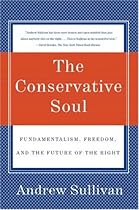
The Radical Right and the Conservative Soul

Articles: Trying To Understand The Tea Party I - The Daily Dish | By Andrew Sullivan; http://andrewsullivan.theatlantic.com/the_daily_dish/2010/06/understanding-the-tea-party-ii.html; http://andrewsullivan.theatlantic.com/the_daily_dish/2010/06/trying-to-understand-the-tea-party-ctd.html

One of Andrew Sullivan's recent threads in The Daily Dish is an attempt to figure out the Tea Party phenomenon. He begins with a New York Times article by philosopher J.M. Bernstein of the New School for Social Research in New York City. Bernstein has argued that Tea Partiers realize deep down that they are dependent on big government, but feel that it has let them down. Recent events have shattered the mutually shared illusion of independence. Their radical reaction to this letdown is compared to a love gone bad. Like a rejected lover, the Tea Partiers are out to prove that they can live without the one upon whom they have become so dependent. It makes a virtue out of what they take to be a broken marriage.

While Bernstein's theory has some appeal for Sullivan, he has found an old essay by Richard Hofstadter to be even more helpful. For Sullivan, and for me as well, the Hofstadter piece (which relies heavily on a book by Theodore Adorno entitled The Authoritarian Personality) is mind-boggling in its parallel to today's situation. The essay is found in a book called The Radical Right, which was originally published in 1955, but was re-released with a new introduction by Daniel Bell in 2002. Adorno's study reflected on the radical right of the early McCarthy years. It is paranoid, gullible, inconsistent, and ready to take radical steps to assuage its perpetual fears.

Sullivan reflects on how the Tea Partiers act as if the original Tea Party, and the founders in general, were against all taxation. The truth of the matter is that they were fighting against taxation without representation, but that fact is usually ignored by their propaganda.

Bernstein's main point is based on an appeal to Hegel. The section on Hegel in Bernstein's article, is well worth reading in its entirety. Hegel, he says, used love as an example of how human beings are granted freedom, and independence, out of an original context of intersubjective (and presumably interdependent) relations. Bernstein says that Hegel taught in The Philosophy of Right that we only become free and independent beings through harmonious love or friendship with others. The freedom is granted due to the value one recognizes and acknowledges in the other. The political right's hostility, says Bernstein, is a result of the sense that this harmonious social accord has been broken.

The Tea Party is also an enigma for me in many ways. Is it possible to be against taxes and for Medicare, Medicaid, and Social Security? Few Tea Partiers will openly acknowledge being against these things. Are they libertarians who denounce all government intervention, even when it comes to the building and maintenance of roads, and the maintenance of an education system? Are they for a powerful military, but against the means of creating one? Are they for the common people, but in fact acting as the main defense of the rich? Are the middle class and poor really helped by a weakened government that may be its only recourse against corporate power and the power of the fabulously rich? So many questions arise with this movement. It often appears that these things have not been thought through well. Sullivan's articles are a good start toward trying to understand the movement.

I'm all for a limited government that runs efficiently. Administrations tend to be self-serving, and grow bloated. But the evidence available to us does not seem to suggest that a completely free market, free from any regulation by a government elected by the people without undue influence by the wealthy corporations it is charged with regulating, will result in a society that is good for anyone but the corporations with the most power. The big banks did not take it upon themselves to limit risk so that we would not be hurt by their gambling. BP did not place limits upon itself to prevent the catastrophe in the Gulf, and it used undue influence in government to get around regulations that were in place.

From a spiritual point of view, the power of love is indeed central to understanding our relationships in a positive and harmonious manner. It is central to understanding our freedoms and responsibilities. Confucius was amongst those who taught of the importance of spiritual maturity--learning to grow beyond the narrowly focused ego in order to identify and harmonize with family, community, nation, and world. Sometimes our political language becomes imbalanced, overemphasizing either freedom or responsibilities. Spiritual teachers have usually tried to create a balance in most aspects of our lives, and that includes a balance of harmony and freedom. Confucius taught that the core virtue of a good society is Ren, an ability to live harmoniously and respectfully with others.


To purchase any of these titles, click on the links above. And please support this blog by making your book, cd, and dvd purchases through Aurora Books (an affiliate of Amazon Books).


Tuesday, June 15, 2010

BBC News - US experiment hints at 'multiple God particles'

Article: BBC News - US experiment hints at 'multiple God particles'

It's always exciting to read things like this, even if we know the media is playing up the 'God particles' name to grab our attention. Ok, it worked. Steven Hawking once said that if he could find the fundamental formula that explains the big bang, it would be called 'God'. The experiments that they're talking about here don't go back quite that far, but it is about the question of why things have mass.

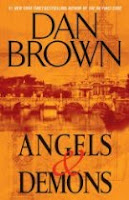
The book Angels and Demons by Dan Brown (click on cover to purchase) begins with speculation about the problems encountered in September 2008 at the Large Hadron Collider in Switzerland. It's the world's largest particle accelerator at 17 miles in circumference, more than 500 feet beneath the Franco-Swiss border. A hadron is a particle composed of quarks, and this accelerator was built to allow us to see what is happening at the very smallest levels of material reality.

It's not known for sure if the Higgs Boson exists. The article refers to the Standard Model, and the Standard Model requires this Higgs Boson to be there. If it exists, it is the reason for the types of energy we experience as having mass.

It got its nickname from Leon Lederman's book The God Particle: If the Universe is the Answer, What is the Question? (click on cover to purchase)


Descartes, in the seventeenth-century, speculated that there are substances with extension that differ fundamentally from the substances that we call mind. These contemporary experiments and theories are an attempt to explain why Descartes' extended things are extended, rather than simply being a form of unextended energy. When I read of such things, I always wonder if it might be that mind is energy of a different type? Is there something to idealist theories that matter is a construction of some type by this mind-energy? If science was successful in identifying the Higgs boson, would that mean we've confirmed materialism, or have we simply taken another step into a kind of idealism? Is it all an accident or is there an intelligence that guides even these most basic operations?

Recommended Books: The God Particle by Leon Lederman; The DaVinci Code, Angels and Demons, and The Lost Symbol by Dan Brown (click on titles to purchase)


Friday, June 4, 2010

Eliot Spitzer on the Lost Spirit of Shared Sacrifice


Recommended:Read the Gettysburg Address by Eliot Spitzer

The former Governor of New York suggests that Lincoln wanted us to carry on the legacy of the brave soldiers who died at Gettysburg by forging a better nation in their name. He is concerned about our lack of a spirit of "sharing," however. His examples of "sharing" are directly tied to the wealthiest amongst us, and the greed they exhibit. A slightly higher tax rate and smaller bonuses for the wealthiest amongst us would not hurt them, and could save our nation from economic ruin. My concern is that they are going to have to feel that their own financial fortunes are at stake before they will be concerned about improving the lot of ordinary Americans.

Related books: SPOILING FOR A FIGHT--THE RISE OF ELIOT SPITZER
ABRAHAM LINCOLN'S GETTYSBURG ADDRESS ILLUSTRATED
ABRAHAM LINCOLN

Tuesday, June 17, 2008

George Will: Putting Reason Ahead of Partisanship


Sometimes I wonder what got into my head when I was a very young man and came under the influence of the pen of George F. Will. And then there are days like today when I read his column, and know exactly why I came under his influence. Today's column is entitled "Contempt of Courts," and Will demonstrates yet again why he is such an important political writer. He is a rare breed of conservative today: he actually puts reasoning ahead of partisanship.

John McCain has called the decision by the Supreme Court to prevent the executive branch of our government from unilaterally holding prisoners at Guantanamo Bay without so much as filing charges against them (let alone making the case) "one of the worst decisions in the history of this country." Will lists a whole series of cases, including the Dred Scott decision that supported slavery and took away all rights from African Americans, and wonders if McCain really things it is in the same league with those. He suggests that McCain's comments were not so much about the case as they were a political tactic bent on making the Supreme Court balance an issue in the campaign. Will writes:

The purpose of a writ of habeas corpus is to cause a government to release a prisoner or show through due process why the prisoner should be held. Of Guantanamo's approximately 270 detainees, many certainly are dangerous "enemy combatants." Some probably are not. None will be released by the court's decision, which does not even guarantee a right to a hearing. Rather, it guarantees only a right to request a hearing. Courts retain considerable discretion regarding such requests. As such, the Supreme Court's ruling only begins marking a boundary against government's otherwise boundless power to detain people indefinitely, treating Guantanamo as (in Barack Obama's characterization) "a legal black hole." And public habeas hearings might benefit the Bush administration by reminding Americans how bad its worst enemies are.

Will is far more gracious to the far right's response to this decision than I would be. He says that it is something reasonable people can disagree about. He admits that there is merit to Chief Justice Roberts' concerns that the decision creates more ambiguity than clarity. For example, does this decision mean that while the Bush Administration can't run concentration camps at Guantanamo, it can run secret prisons around the world in areas completely outside of U.S. jurisdiction? Does this decision mean that other Constitutional rights also apply to the prisoners at Guantanamo?

I wish that I believed that these clever arguments were the main reasons Roberts disagreed with the decision. I wish I did not believe that he is another vicious right winger whose main concern in life is for security, survival, and victory rather than for justice. But I admire Will's attempt to show the virtues of the right wing Justices' reasoning. I admire more his ability to get to the heart of the matter when he writes:

No state power is more fearsome than the power to imprison. Hence the habeas right has been at the heart of the centuries-long struggle to constrain governments, a struggle in which the greatest event was the writing of America's Constitution, which limits Congress's power to revoke habeas corpus to periods of rebellion or invasion. Is it, as McCain suggests, indefensible to conclude that Congress exceeded its authority when, with the Military Commissions Act (2006), it withdrew any federal court jurisdiction over the detainees' habeas claims? As the conservative and libertarian Cato Institute argued in its amicus brief in support of the petitioning detainees, habeas, in the context of U.S. constitutional law, "is a separation of powers principle" involving the judicial and executive branches. The latter cannot be the only judge of its own judgment. In Marbury v. Madison (1803), which launched and validated judicial supervision of America's democratic government, Chief Justice John Marshall asked: "To what purpose are powers limited, and to what purpose is that limitation committed to writing, if these limits may, at any time, be passed by those intended to be restrained?" Those are pertinent questions for McCain, who aspires to take the presidential oath to defend the Constitution.

If only Marshall were back at the head of the Supreme Court, I might have more confidence that justice will prevail in our country.

Friday, June 13, 2008

Doing What is Right on Guantanamo


The United States of America lived up to its promise as a nation that promotes human rights and justice under democratic rule yesterday.

The Supreme Court got it right when they ruled that foreign detainees at Guantanamo Bay, Cuba have a right to something at least resembling habeas corpus. The White House under George Bush has repeatedly thumbed its nose at any semblance of justice as it follows its own brand of Machiavellian principles. While it has allowed a military tribunal to oversee the system, Justice Anthony Kennedy (above), writing the majority opinion, said that the military's "review process is, on its face, an inadequate substitute for habeas corpus." Justice Kennedy writes.

Many of the critics to the ruling will argue that alien "enemies" do not have any Constitutional protection. This ruling disagrees. But it does so while stating explicitly that it is concerned with the just treatment of prisoners, and not with a strict application of U.S. citizens' rights toward foreign prisoners. "We do not hold that an adequate substitute must duplicate [the federal habeas law] in all respects." Kennedy admits in his response to the dissenting opinion, that there is no precedent for their application of constitutional principles to foreign detainees, but denies that this is a "barrier" to the decision.

That there is something more to this ruling than what is at stake in this one case shines through in the most popular quote from Kennedy's written opinion: "The laws and Constitution are designed to survive, and remain in force, in extraordinary times."

Importantly, Kennedy writes that "Liberty and security can be reconciled; and in our system they are reconciled within the framework of the law."

The impact of those two statements in combination reach far beyond the Guantanamo case alone. The Court is saying what many of us have believed for years--that the Bush Administration cannot dismiss the rule of law under the pretense of the very real dangers presented by terrorism. That would, presumably, apply to curtailment of the civil liberties of U.S. citizens as well.

Many of our fellow Americans will resent and ridicule this decision as a liberal abuse of the Court's powers. In fact, Justice Scalia and his fellow dissenters lead the way in this interpretation of the decision, which only narrowly passed at 5-4. We live in a very divided country. The conservative amongst us seem to want to put 'survival' at the top of their list of values. From the survivalist perspective, they justify actions that are not fitting for a democratic nation that supports basic human rights. But hasn't this always been the case in the long history of human affairs? The question in ethics is often about doing what is right and just as opposed to what is merely expedient. I am personally ashamed of my fellow countrymen whose consciences are not awake enough to remind them of this point. Nearly every atrocity perpetrated by dictators around the world has been done under the name of this expediency. It is against this arbitrariness that the rule of democratic rule has risen, and we must not forget that.

The United States should be a beacon of hope for the world. It should not be feared as an enemy of the rule of law.

Good articles: Congress's Guantanamo Burden
by Benjamin Wittes, and A Victory for the Rule of Law by Eugene Robinson. I think Newsweek gets it right with their title, Overplaying its Hand, by Stuart Taylor, Jr.

Sunday, May 11, 2008

Honesty and the Political Process


Jimmy Carter wrote about the need for presidents to be honest this morning.

There were quite a few people who wrote in and said awful things about him in response. The venom of Republicans against this man is incredible. They can't stand that he actually lives his Christian values, it seems. He tries to be a peacemaker, and that means meeting with those who live in ways that you don't agree with.

That said, the following was the comment I sent in:

This discussion reminds me of Gandhi, and his philosophy of Satyagraha.

People take Carter to be naive, if not foolish, for saying things like this. But that's because most people have their lives wrapped in tangles of little lies, and it's generally believed that this is the way you 'get by' in life. The world is a mess, largely as a result of this. We can't trust our politicians or the political process. We can't trust the media. We can't trust businessmen, or those who represent them. We can't trust people who say they're in need at social services offices. Webs of lies are all around us, and cynicism grows with each passing year.

Gandhi believed in the power of truth. He believed that one must find the truth and live it. And he showed that it works.

"Be the change you want to see in the world," he said. We can't wait for Presidents to tell the truth. We can't wait for the oil industry to tell the truth. It starts with us. Each individual and each community must strive to live the truth, and then it will become far less tolerable to accept these untruths from political and business leaders.

Wednesday, May 7, 2008

Obama is Taking the High Road

Barack Obama has won the primary in North Carolina by a considerable margin. Hillary Clinton held on to win a very close one in Indiana. Obama's campaign manager, David Axelrod, pointed out that this narrow margin of victory for Clinton can be credited to Rush Limbaugh's get-out-the-vote for-Hillary campaign. 10% of the voters in the Democratic primary in Indiana were Republican, and a sizable number of them supported Hillary. I don't know for certain how many Republicans came to the polls for Hillary at Limbaugh's behest, but I do know that the Clinton's victory came by such a small margin that if even 10% of the Republicans voting for Hillary did so in order to mess up Obama and the Democratic Party, it worked.

Through all the Clinton mud-slinging, Obama has chosen to take the high road. He keeps to an optimistic message. He believes that real change is possible in Washington that will help average Americans. And I am pleased that Obama is able to present the face of a better future for our country.

Now it's on to West Virginia, Oregon, and Kentucky. Puerto Rico will come after that. Clinton had to loan her own campaign more than $6 million dollars this month, because she can't get enough money in from supporters. I'm not sure that's the way campaigns out to be supported in America. One of the problems of this country is that it's run by the wealthy. And having candidates who can throw that kind of money at a campaign that isn't supported by the people is just a symptom of this same disease that continues to weaken the ideals and the promise of our country. But it's legal--for now. We should all be aware of what's going on, however, and ask ourselves if we want to nominate a candidate whose campaign can only continue because she is obstinate and filthy rich.

Clinton is determined to have this nomination decided at the convention by the super delegates. My concern is that, by leaving the nomination to be decided there, the news that Obama is our nominee will provoke a strong negative reaction in the Clinton camp that won't have time to heal before November. The Convention is in August. The election is in November. Having a huge uproar of internal hostility at the Convention could easily spill over with such venom into the fall that the Democrats may not have time to recover and take on the real challenge--keeping the Republicans from retaking the White House.

Thursday, May 1, 2008

"The Thrill of Victory"

As a native Washingtonian, I was thrilled to see the parts of the Wizards-Cavs game that I did get to see yesterday. It was Game 5 of the best of 7 series. The Wizards were down 3 games to 1. It looked like Lebron James--I refuse to use his moniker "The King" as he's most definitely not my king--was going to wrap things up in Cleveland. Then we found out before the game that Gilbert Arenas, the face of the Wizards' franchise for the last several years and an athlete with enormous talents, is finished for the season. He tried to make a comeback from knee injuries twice this year. He played the first eight games of the season, and then bits and pieces of the last few games of the season. He could never make it back. The issue was compounded when he suffered a bone bruise on his surgically repaired knee early in the series against Cleveland. But Washington learned how to win without Arenas this year. That's why they were the fifth seed in the playoffs. Caron "Tough Juice" Butler knew he had to step up and deliver and ('lo and behold') he did! Butler scored 32 points on 11 of 22 shooting from the field. And the Wizards won 88-87.
I watched the first quarter of the game at "The Grad" in Chico. They have good food and a whole slew of t.v.'s, big and small. One of the Grad employees was watching from the next table over, and told me his family knows Arenas and he's a big fan of his. (It's nicer when you're not alone watching these events.) The Wizards had a steady lead through the first quarter. Then I had to go to give a test to my Logic class. So, off I ran. I was able to monitor the game through ESPN's "gamecast," which lets you know the score and who did what. Washington still led at the half. When I finished helping students after the test, I looked and saw that Lebron James had just made a slam dunk to put the Cavs up by 1 in the 4th quarter, with less that 8 minutes left, and I thought 'Uh, oh! Here it goes." I raced back to the Grad in time to see the last 4 minutes of the game. With less than 2 minutes left, the Cavs were up by 5 points. The Wizards' center, Brendon Haywood, fouled out. I figured they were finished. But the Wizards weren't finished. James missed a 3-pointer, and the Wizards got the rebound (which was not a sure thing in this series by any stretch of the imagination). The ball was put in Caron Butler's hands. He drove down the right side of the lane with Lebron James guarding him. Everyone agrees he was fouled at least twice, but no call was made and he made the tough shot that put the Wizards up by 1 with 3 seconds left. Again, everyone knew that James would get the ball for the final shot. James tried the very same move up the right side of the lane on his side of the court. Without a doubt, James was also touched on his way in, but again no foul was called and, unlike Butler's shot, James's shot rimmed out. Game over. Lest anyone feel sorry for James, I read one account that assures us that the "foul" that wasn't called was a result of James's teammate, 7 foot 3 inch Ilgouskas, pushing Wizard center Darius Songailla from behind into James. Songailla tried to avoid James. The refs just made it a no-call. James missed the shot. The game goes back to Washington for Game 6. So, the Wizards have made it a series now.

ASOKA: A Very Impressive Indian Film

Every semester in my Eastern Religions class, I speak briefly about King Ashoka in India. He won a series of wars and become the Mauryan Emperor. Afterwards, he converted to Buddhism.

I just watched a beautiful Indian movie about his life called ASOKA. (There's an accent on the S that makes it an 'sh' sound). It takes a little getting used to seeing the Indian musical productions inserted here and there, but they are lovely, too. But the story is remarkable. Ashoka garners our sympathy in the beginning. He's a terrific warrior-athlete who is also very handsome and charming. But his character grows darker and darker as time goes on. We are drawn into his dark quest as a kind of Clint Eastwood revenge cycle. He has been done wrong, and we appreciate his right to fight back. But with success, he goes over the top. There's no end to his thirst for revenge, and by the end, the whole world is his enemy. He tells us that he doesn't care if he destroys everything. There's a beautiful love story in the midst of this that is, at first, the tragic cause of his undoing, and then, later, is the cure that brings him back to his senses. We don't get to see the results of his conversion. I wish that we could have. Buddhism was established in India by his conversion in the 3rd-century BC. I would love to have seen how that developed. But this movie helps us understand why the powerful emperor might have grown tired of war, and how he might have come to see the folly of his ways. Personally, I was very moved by the tragic dimension of this story.

Tuesday, April 29, 2008

Another 4 Years of a Bush-league Presidency?


I was giving McCain too much credit. He is a Republican conservative ideologue after all.

Michael D. Shear reports in the Washington Post:

McCain dismissed his Democratic rivals' proposals for universal health care as riddled with "inefficiency, irrationality, and uncontrolled costs." He said the 47 million uninsured Americans will only get covered when they are freed from the shackles of the current, employer-dominated medical insurance system.
Do I understand this correctly, McCain? You're going to do what? You're going to free us from "the shackles" of employers providing insurance for their employees? Oh, yes, that will fix everything.

Sunday, April 20, 2008

"Captains Courageous"


Tara, the kids, and I watched the 1937 film "Captains Courageous" last night. It's a Rudyard Kipling tale, based on his 1897 novel. It's the story of Harvey, who is a spoiled rich kid who has no mother and feels neglected by a father who is too busy to spend time with him. Finally, his father is persuaded to take him on his business travels, but Harvey falls overboard. He is rescued by a Portuguese fisherman named Manuel, played by Spencer Tracy, and the rest is about Harvey learning how to be a decent human being while learning to work with the crew of Captain Disko's boat. It's a very good cast. Freddie Bartholomew plays Harvey. Lionel Barrymore is terrific as the captain. John Carradine (David's father) is excellent as crewman "Long Jack." Micky Rooney plays the captain's son, Dan, in a small yet effective role. But the central character is the PoManuel, played by Spencer Tracy in one of his first major roles. Tracy won an Oscar for Best Actor for the performance. I will never forget Manuel's songs, his playing of a Herty Gerty, his tales of a heavenly fisherman's paradise where he hopes to join his father someday, or his calling the boy (with a heavy accent) "Little Fish." This is a very good film, directed by the excellent Victor Fleming.